Showing posts with label Homeschool Co-ops. Show all posts

10/12/15

Homeschool Co-op How To


I have had some form of a homeschool co-op for many of the 17 years that I have been homeschooling. I love being around people, and I love the accountability and enrichment that homeschooling with a co-op has provided. 

Although space limitations have kept our co-ops very small, I dream of one day being able to meet in a facility where I could join with more families in my community to learn together.


In past years, we have only met once a month, but this year with no baby nap schedules to worry about and with fewer students to manage, I have two co-ops that meet every other week. This means that I have a co-op meeting each week. My children and I never have to go too long between an inundation of time with friends. Hooray for that!


One co-op is especially geared towards teaching writing and science and I am having a great time teaching the Apologia Flying Creatures class to my students. We scavenge for feathers, build bird feeders, and mostly draw, paint and read books. It is loads of fun. Meanwhile, friends who are better at teaching the upper grades are doing biology and general science with my older kids. It is a wonderful situation where we all get to see our children learn and have fun.

I recently joined Periscope, a very interesting app for live broadcasting, and my son and I have been making videos, with my broadcasts or with iMovie. The video here is a broadcast that I did on Periscope which explains exactly how to start your own co-op.


Some of the specific steps that I talk about in the video are;

Find a group to co-op with

Pick your subjects or classes

Meet together to create a schedule

Designate who teaches what and where you will meet

Then, just do it!


It isn't too late to start a homeschool co-op this year. It could be as simple as a play date with a particular theme, or as complex as hosting multiple classes. Book clubs, sewing bees and adventure clubs are all wonderful ways to get families together for fun and learning.


If you don't have a group of homeschoolers to gather with, check out the Wild and Free groups page here, or look up your state's homeschool association. Somewhere there is a group of families waiting for you to join them and learn together!

If you have questions about how to start a co-op, feel free to post them here, or e-mail me at jennpepito@yahoo.com

This blog post also has some great detailed advice on starting a co-op.

If you want a comprehensive book that explains how to start a co-op, check out this one.


This post contains affiliate links.

4/30/15

Early American History-Immigration and Industrilazation

This month our history studies have focused on immigration and industry in America. As we have wrapped up our stories and readings from Civil War era history, we have begun to explore the late 1800's and early 1900's. This was an exciting time for our continent. So many new industries meant new opportunities for hopeful immigrants.


The thing that I have most looked forward to in our year of history co-op, has been this month's meeting. At the beginning of the year, when we mapped out the plan for our co-op, I knew this would be a fun day for our children. Instead of the usual program of singing, geography and art projects, our children would have the opportunity to open up a real store as well as explore their diverse ancestry.


The plan was simple. Each family would pick one of their ancestors to study, and prepare a presentation based on that ancestor's country and history. They would also bring products which related in some way to their ancestry to sell for a small amount, in this way representing the small businesses and farming endeavors which these people undertook in order to provide for their families. 
We did this same project over four years ago, in the last community that we lived in, and at that time, we chose Portugal which represents my husband's grandmother. For Portugal, we sold veggies from our garden, and homemade sweet rolls. This time, we chose England, which is where my grandmother's parents came from. 

We started our country fair by having each family stand at their "store" and share their presentation. One of the best parts of preparing an ancestor presentation is the opportunity to learn about our family history. I listened intently as my son shared the interesting information that we had compiled after interviewing my grandmother. For instance, I had never heard that my great grandfather was the son of an English strawberry farmer near Kent. Nor, that his brave fiancé, after waiting three years for him to send for her, took matters into her own hands, and headed to Canada. She wanted to give him the opportunity to make good on his commitment to marry her.

They did marry, and had six beautiful children, one of whom was my own dear grandmother.

We celebrated our heritage today at our country fair by cutting up an old sheet to make "Nearly Proper English Hankies" which we sold for twenty-five cents, along with fresh homemade scones and tea.


The children listened eagerly to their friend's presentations as well. They heard reports from several European countries, as well as one from our darling little friend, who was welcomed here eight years ago by her lovely parents, becoming a first generation Chinese-American.


After the children took turns giving their presentations, the stores were open for business! My kids were excited for the opportunity to make a meager profit, one of the benefits of not offering allowance. 


They were also excited to spend their money at their friends' stores. The goods for sale were exciting! Hawaiian soap, Scottish shortbread, and Chinese fans were big hits with my kids as they eagerly divested themselves of their small change. I did end up raiding my husbands coin stash a few times, to replenish their coffers, it didn't occur to me to teach them a real lesson on economy when they, and their friends were so hopeful of selling their products.

Although this day was simple to prepare for; we merely did a little crafting, cooking and report writing in the few days preceding the event, it had a big impact on the children. Now they can have a small glimpse into the process of creating products and marketing them, and a taste of what some of their ancestors experienced as they crossed the sea in search of opportunity.


3/3/15

Westward Expansion


We have been having such an interesting year, studying
Early American History. It is hard to believe that we are in the last three months of the school year already! It is flying by. I often wonder if I am doing enough schoolwork, but seeing my children excited about what they are learning, reassures me that we are on the right track.

We recently got together with friends to celebrate our studies of the pioneers and westward expansion. These get togethers are one of the highlights of our history studies. While at home, I read lots of great books to the children, we do map work, and also journaling, but the monthly co-op meetings are when we can delve into hands on projects that require more preparation.


At this months get together we made butter! This was actually incredibly easy and group friendly. We simply poured cream into clean mason jars, screwed the lids on tight and let the kids go crazy shaking them until a nice lump of butter had formed. I took a picture of our butter after we made it, but then when I was going back through the photos, I couldn't figure out what it was and deleted. It was yummy, if not photogenic. 

The butter was spread on fresh baked bread, the best of pioneer treats, and eaten along with tortillas, and cattail tubers which we had harvested from our pond. A good study of the pioneers and westward expansion wouldn't be complete without talking about some of the foraged foods that they ate to survive.

We also drank tea made from nettles. Not the tastiest of drinks, but super healthy and according to research, a good traditional remedy for all manner of illnesses, including allergies and anemia.


Another thing we do at our co-op meetings are oral presentations. I feel that being able to give a report is an important part of homeschooling. It is also a helpful motivator for my children to do well on their journaling projects so that they have something good to share with the group. We have been alternating Draw Write Now books with fine art postcards from Mommy It's A Renoir for art journaling prompts. These go nicely with narration exercises, and if we are not feeling creative enough to come up with an original narration, we simply copy the sentences from Draw Write Now as well. These journaling pages then become oral reports for the younger students.

Draw Write Now, Book 5: The United States, from Sea to Sea, Moving Forward (Draw-Write-Now) Mommy, It's a Renoir!

The oldest of my four students still in my homeschool prepared a report on health care, or the lack thereof, during the time period we were studying. My 12 year old created a stop motion Lego movie about Civil War Sea Battles. I love seeing them use various technologies and mediums to prepare their presentations.


For map work, we looked at where the Lewis and Clark Expedition traveled, as well as what area the Louisiana Purchase encompassed. Later, we traced U.S. maps and labeled them with the route which the Lewis and Clark Expedition took, so many years ago.


Back at home, I read to the children from "Sacajawea" by Della Rowland, while they made a tent and pretend fire which they roasted pretend marshmallows over. Or maybe it was bear meat on a stick?
Stories are great at providing prompts for imaginative play. They also do so much to expand your children's vocabulary, these are a few of many reasons why we make a high priority of reading aloud. I also have a basket of books based on the period we are studying, which my children are encouraged to read from as we work our way through the year. If possible, I give my older children books which include source documents. I want them to be aware of what the thought process of historical figures was, and not just hear their stories through a modernist filter. 

The Story of Sacajawea: Guide to Lewis and Clark (Dell Yearling Biography) The Journals of Lewis and Clark (Lewis & Clark Expedition)
Little House Nine-Book Box Set

American History is full of fascinating people, and I am studying it again, with some of the most fascinating people that I know. I hope that your children, and your studies, bring much joy and inspiration to your life as well.

This post contains affiliate links (Amazon)


2/5/15

Fun With Early American History

In our homeschool this year we have been studying Early American History. We have created bows and arrows while learning about Native Americans and cooked over an open fire. We sculpted clay maps of the United States and made tiny walnut shell boats. 


We studied about the Revolutionary War and the children learned how to sing The Shot Heard Round The World. We have also read some wonderful books. These are a few of our favorite books this year.

               In 1492


There are many other Early American History books that we love, such as Carry On Mr Bowditch and the Little House on the Prairie series but we are skipping those this year to read a few books that we haven't read in a while.


We have also been working on our timeline, both our hallway wall timeline and the book that my 3rd grade daughter is keeping. We love the Homeschool in the Woods timeline figures. They are well done black and white line drawings which are easy to color. Timeline work is a great task to keep kids listening while I read aloud. I also have the children color or draw pictures for their narration sheets.

 
For our project day we joined with a few other families to create tin can lanterns in honor of Paul Revere. Unfortunately, I didn't read the instructions very well. After our project day, I read the above post which suggested emptying your tin can of the contents, filling it with water and then freezing it so that when you go to poke the holes the can doesn't collapse like ours did. 


We also drew silhouettes of the children, which was also a bit harder than I had imagined! Try keeping a 6 year old boy still while you draw their profile. Not easy. This is a good project with girls. Older girls. Oh, and make sure you buy 11X17 paper because fitting a child's entire head onto a regular size sheet of construction paper is also a bit difficult.


One of my favorite aspects of homeschooling is reading to my children and talking about books. I get to sit and sip coffee and we all get to learn about new people and places. On the flip side, projects are not my favorite aspect, which is why I try really hard to find people to co-op with so my children can learn from other mothers who are hopefully more creative than myself.


History is my favorite subject to teach, I love learning about the past with my children and through the use of maps and timelines, connect people and stories with their place in time. There are many things to love about homeschooling, and learning history with my children is one of them.

This post contains affiliate links.

What are your favorite resources for teaching history?


11/7/14

Bountiful Homeschooling On a Budget


I am doing an online book study with the book 7: An Experimental Mutiny Against Excess by Jen Hatmaker right now and it is a fresh reminder of why I wrote the book, Bountiful Homeschooling on a Budget. So often, our decisions about money are based solely on what we want or can afford, and we often neglect to consider how our financial choices glorify God, or how they don't, whatever the truth may be.

So, over the next several weeks and just in time to help you save for the holidays, I am going to be highlighting some key ideas from the book.


One of my favorite ideas for saving money on homeschooling is to form a learning community with local friends. Homeschooling is so much more fun in community, but if you are trying to do it on a budget then many organized co-ops such as Classical Conversations may be out of reach. 

As well, there may be a particular learning focus that is important to you, and so a one size fits all approach is not going to be in the best interest of your family.

We have had a homeschool co-op in some form for over ten years, we started one when we lived in the Northern California foothills, grouped up with some homeschoolers while in Mexico, and have one in our current little town as well. 

Some years, the focus has been on science and other years we study history. We are currently working our way through Early American History and having a blast with a small group of local friends.

For myself, the areas of learning that are really hard for me to cover are art and science experiments so when we have a co-op we make sure to have those areas covered. This has also saved me lots of money on art and science classes as we have been able to learn from other moms in our community those skills which we might lack.


Interested in forming a co-op but not sure where to start? 
Here are a few easy tips to get you going.

1. Find a few friends who are interested in getting together to learn. Usually 3-4 families is optimum for an in-home co-op.

2. Set up a meeting to discuss the schedule and expectations. I usually plan a year's worth of topics at the beginning of the school year. For instance, we might meet once a month and cover a chapter in a science book at each meeting or we might cover a different time in history at each meeting. 

 
3. Plan who is responsible for teaching. In our co-op, we usually have rotating duties which include; hosting, art instruction, geography and snack. In our science group we would assign a different mom to each science book group (some children were in high school textbooks, others were in elementary Apologia books).

4. Give each mom a calendar and then form a Facebook or other group to keep the moms in the loop about where you are meeting and what they are responsible for.

Having our own homeschool co-op has saved me thousands of dollars and hours of time. I did check into Classical Conversations one year, but with a family of my size and even with working as a tutor it would have been very expensive and even more time consuming. For now, forming our own co-op has been a wonderful and creative option for learning in community and gaining new skills. 

If however, Classical Conversations is the best option for you, I know some excellent tutors and directors. Comment for more info.


Subscribe to get more money saving ideas delivered to your inbox!
This post has affiliate links.

9/15/14

Discovering Early Americans


We have started another wonderful year of learning and this year we are doing Early American History. We have used various curriculum in the past but this year we are staying on a budget with homeschool materials and just studying a different event in American History each month without purchasing a curriculum. We will then celebrate with a monthly project day with a few of our friends.


Although we don't have a formal curriculum this year, I own a few high school textbooks and student readers which I can use as resources for the younger children, as well as a wonderful set of timeline figures and blank maps which will be resources that I pull from.
Our first month was the study of Native Americans, and we found some interesting books to read about a few different tribes. Because the content of some of these books may be a bit dark, I will edit as needed while I read, but they were all fascinating.

Book List


If You Lived With The Hopi-Kamma

The Serpent Never Sleeps- Scott O'Dell

The Trail Of Tears- Joseph Bruchac


We used our Picture Story form to write and illustrate a book report for each story that we read. This has been a good way to use the writing skills that we have learned through Institute for Excellence in Writing, as well as a good opportunity to evaluate the story and get writing practice.

Another fun activity was to label a United States map with geographical features as well as the territory that each tribe was living in.


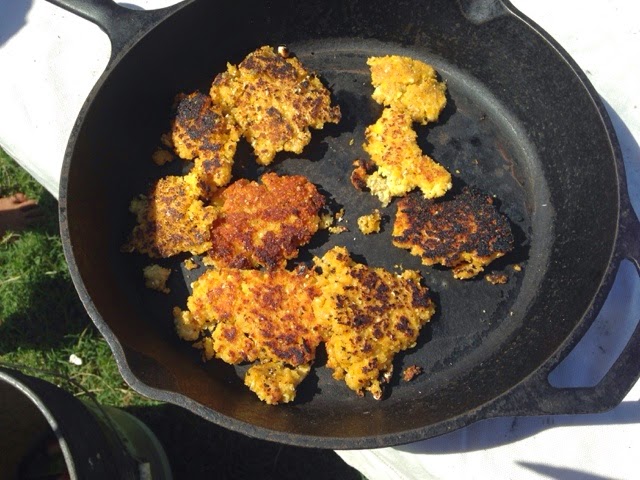
The big finale was our project day. The children dressed up in costumes that I had made for some of their older siblings. We mixed up corn cakes in honor of the Pueblo people that we had been reading about and cooked them over an open fire. We used long branches that we had pruned off our apple tree to build a teepee which we covered with an old sheet.


The children also made beaded jewelry, bow and arrows and ground acorns in a grinding stone. They  ate snacks from the time period such as dried cranberries, popcorn and beef jerky.
They also presented reports, my youngest students had a report on the Pueblo people complete with a rigatoni noodle pueblo village and my 11 year old son presented his Pueblo report while donning an elaborately painted mask which he had copied from a book.


Although our project day incorporated elements from many different tribes, it was a fun filled time to experience some of what the early Americans had experienced.
After we had finished up with our project day, I handed out blank books.  I purchased these in the dollar aisle at Target and we will use them as a scrapbook of our year. The children will fill in one or two pages each month with some of the information that they have learned.


We are having so much fun incorporating many elements of learning into our history studies this year! Reading interesting books to my children and exploring other cultures and time periods are just a few of many wonderful aspects of homeschooling. 


This post contains affiliate links. So far, I haven't made any money from it, but it is worth a try!